

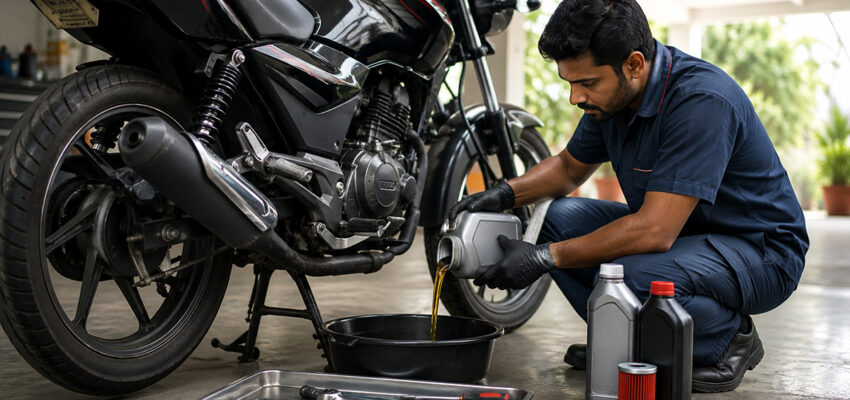
Bike Engine Oil Change: When Should You Change It and Why?
You probably searched for bike engine oil change because something feels off with your bike — rough gear shifts, louder engine sound, or the service centre telling you, “Oil change due, sir” again. And if you ride daily in Bengaluru traffic, it can be hard to judge what’s genuine and what’s just a bill-padding habit.
This guide cuts out the confusion. We’ll talk about when you should actually change engine oil for bikes, how the city’s stop-go riding affects your schedule, what happens if you keep delaying, and how to avoid the most common mistakes riders make.
Why Engine Oil Matters More In Bengaluru Traffic
On paper, your owner’s manual might suggest a comfortable bike oil change interval. In real life, Outer Ring Road at 7 pm is not “normal conditions”. Your engine spends ages idling, crawling, heating up, then cooling down again in office basements.
Engine oil has to lubricate, cool and clean the inside of your engine. In heavy traffic and short city rides, the oil breaks down faster, picks up more carbon, and runs hotter for longer. That’s why riders who follow only the odometer reading often end up with noisy engines much earlier than they should.
If you do mostly short commutes — say from Whitefield to ITPL or from Jayanagar to Dairy Circle — your oil ages by time and heat, not just kilometres. You’ll need to think of both distance and months since the last motorcycle oil change.
How Often Should You Change Engine Oil For Bikes?
Most manufacturers give a range for bike oil change like “every 3,000–5,000 km or 3–6 months”. That’s a starting point, not a law. The right number for you depends on how and where you ride.
If you ride daily in dense city traffic, follow the lower side of the range, not the upper. For example, if the brand says 6,000 km, many Bengaluru riders are better off changing around the 4,000 km mark, especially on older bikes.
Low-mileage riders make the opposite mistake. They think, “I’ve only done 1,500 km this year, I’ll skip the next bike maintenance service.” But oil also ages with time and temperature cycles, even if the bike is not covering distance. If it’s been a year, change it, even with low usage.
Typical Bike Engine Oil Change Intervals
A simple way to think about your bike engine oil change schedule is this: aggressive riding, high heat and traffic push you towards more frequent services. Light, smooth riding with some highway use lets you stretch it a bit — but not beyond the manufacturer’s limit.
If you’re confused, look at your service book once and then observe how your engine sounds and feels in the last 500 km before the due reading. That tells you whether your current interval is a bit too long for your usage.
Warning Signs You’re Late For A Bike Oil Change
You don’t always need a reminder sticker on your headlamp to know a bike oil change is overdue. Your engine will start sending small signals first.
The most common one is a change in engine note. The sound becomes harsher or “metallic”, especially at higher revs. You may notice the bike feels slightly stressed even at your usual cruising speed.
Next is gear behaviour. Harder shifts, a light “clunk” on every gear change, or the bike slipping into neutral too easily can all point to tired oil. If your clutch and cable are properly adjusted and you still face this, fresh oil often fixes it.
If you see any of these signs along with the service due date approaching, don’t push the motorcycle oil change any further. You are running the engine on borrowed time.
What Happens If You Keep Delaying?
Delaying a bike oil change once doesn’t destroy an engine overnight. The problem is when “once” slowly becomes your pattern. Old oil loses viscosity and can’t keep a proper film between moving parts.
Over time, this leads to more wear on pistons, cylinder walls and bearings. The engine starts consuming more fuel, running hotter and losing smoothness. In extreme neglect, you can end up with oil burning, smoke from the exhaust, or major engine work that could have been avoided with a few timely services.
Mineral Vs Synthetic Oil: Does It Change The Interval?
Many riders in Bengaluru ask if paying extra for synthetic engine oil for bikes means they can stretch the interval a lot more. The honest answer: it helps, but it doesn’t make your engine immune to traffic, heat and neglect.
Mineral oil tends to break down faster under high temperatures, while synthetic oil holds its properties better and often gives smoother running. That’s why some riders notice quieter engines and better cold starts after switching.
But traffic is still traffic. Even with synthetic oil, repeated short trips with long idling will age the oil. You can often run a slightly longer interval than with basic mineral oil, but you should still stay inside what the manufacturer recommends.
How To Choose The Right Oil For Your Bike
The correct grade and specification are always mentioned in your owner’s manual. Don’t guess, don’t copy a friend’s bike, and don’t choose just based on price. Wrong viscosity can make starting harder, cause extra wear or affect mileage.
If you’re booking a bike service at home, confirm that the mechanic uses the grade recommended for your model and asks about your riding pattern. A good technician will not blindly pour the cheapest can lying around.
DIY Oil Change Vs Professional Bike Service
Plenty of riders like to do a motorcycle oil change themselves on weekends. It feels satisfying, and it teaches you more about your machine. But there are a few practical catches that people underestimate.
You need the right tools, a proper drain pan, torque sense on the drain bolt, and a clean way to refill without introducing dirt. You also have to dispose of used oil responsibly through proper channels, not into drains or open ground.
When you get a professional bike service, the oil change is done alongside other checks — air filter, spark plug, chain condition, brake pads and more. Those inspections matter because an engine with fresh oil but a clogged air filter or dry chain still won’t feel right.
When Does Doorstep Service Make Sense?
If you live in a packed lane in areas like BTM Layout or Koramangala, getting the bike to a garage itself can feel like a project. In those cases, a doorstep technician doing a full bike service at home, including oil change, can save you time and missed office hours.
Before booking, look at a detailed bike service checklist so you know what should be covered along with the oil change. That way you’re not only paying for fresh oil but for a healthier bike overall.
How Oil Change Fits Into Your Overall Bike Maintenance
An engine oil change is one pillar of bike maintenance, not the whole building. Riders in Bengaluru often fixate on the oil and ignore the rest until something fails loudly.
Oil change intervals should be planned together with other regular jobs like chain cleaning, brake inspection and coolant check for liquid-cooled engines. Treated as a package, your bike feels smoother, stops better and stays reliable on both office commutes and weekend rides.
If you want a bigger picture view of how all these pieces fit together, guides like Motorcycle Maintenance 101 help you see where oil change sits in the full service cycle.
Planning Service Around Cost And Convenience
Many riders push an engine oil change because of time or money pressure. The usual thought: “Bike is still running, I’ll do it next month.” That month becomes two, then three.
Instead, treat your oil change like rent or EMI — a fixed, expected part of owning a bike. You can get a sense of typical bike service cost in Bangalore from existing guides and plan your budget so an upcoming service doesn’t feel like a surprise attack on your wallet.
Common Oil Change Mistakes To Avoid
One of the biggest mistakes is trusting only the odometer. In our climate and traffic, time since last service is just as important as kilometres covered, especially on older bikes.
Another frequent error is ignoring the oil filter. Changing oil but not the filter means the new oil immediately runs through old dirt. Most regular bike service packages include both together; if someone offers to “save you money” by skipping the filter, that’s not a favour.
Some riders keep changing brands and viscosity at every service. Engines don’t like inconsistency. Find the right grade, stick with a known-quality brand, and maintain a stable bike oil change schedule rather than experimenting constantly.
If you’re already following a solid schedule and still have repeated issues like overheating or unusual noise, it’s time to look beyond the oil. A detailed guide like 7 common bike issues you can’t ignore can help you spot other underlying problems.
Conclusion
Getting your bike engine oil change timing right is less about memorising a single magic number and more about paying attention to how and where you ride in Bengaluru. Your owner’s manual gives you the boundary, your daily traffic and engine behaviour tell you where inside that range you should land.
Plan your services, listen to your engine, and combine timely oil changes with overall care so your bike stays quiet, responsive and ready every morning. If you want that process to be simpler, Bro Mechanic can help you fit your next service into your routine without the usual workshop drama.
Frequently Asked Questions
Q1. How often should I change engine oil for my bike in Bengaluru traffic?
Ans: In heavy city traffic, it’s safer to follow the lower side of the manufacturer’s recommended interval. Many riders find that changing oil slightly earlier than the maximum suggested kilometres keeps the engine smoother and cooler. Always consider both distance and time since the last change.
Q2. What are the signs my bike oil change is overdue?
Ans: Common signs include a harsher or louder engine note, harder gear shifts, and the bike feeling slightly strained at your usual speeds. You might also notice the engine running hotter than before. If any of this lines up with your due service reading, don’t delay the oil change.
Q3. Can I skip oil change if my bike has run very few kilometres?
Ans: No, low kilometres alone don’t mean the oil is fresh. Engine oil ages with time, heat cycles and contamination even if the bike has mostly short, infrequent rides. If it has been a long time since your last service, change the oil on time as part of regular bike maintenance.
Q4. Is synthetic oil better for engine oil for bikes in city use?
Ans: Synthetic oil usually holds its properties better under heat and can give smoother running, especially in stop-go city conditions. That doesn’t mean you can ignore the service schedule. You may stretch the interval slightly compared to basic mineral oil, but still stay within the brand’s recommended range.
Q5. Can I do a motorcycle oil change at home myself?
Ans: Yes, if you’re confident with tools and follow the correct procedure, you can change oil at home. Make sure you use the right grade, don’t overtighten the drain bolt, and dispose of used oil responsibly. Many riders still prefer getting it done as part of a full bike service so other systems are checked at the same time.
Q6. How does riding in Bengaluru specifically affect my bike service schedule?
Ans: Bengaluru’s slow-moving traffic, frequent idling and short office commutes mean your engine spends a lot of time hot but not covering distance. That accelerates oil ageing compared to open highway use. Because of this, city riders often benefit from slightly shorter bike oil change intervals and more regular check-ups.
