

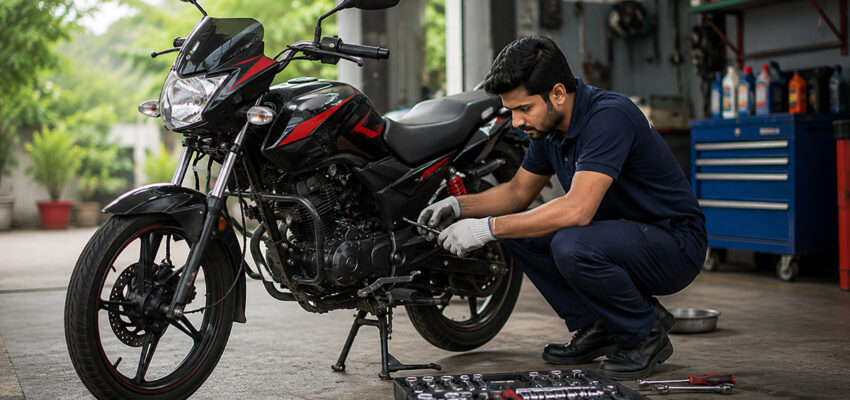
Bike Starting Problems: Common Causes and How to Fix Them
You turn the key, hit the starter, and nothing. Or the engine coughs once and dies. A sudden bike starting problem is one of the most annoying issues for everyday riders in Bengaluru, especially when you’re already late for office.
The good news: most start issues come from a small set of predictable faults. If you understand the pattern, you can often diagnose the problem in a few minutes and decide whether it’s a quick fix at home or a job for a bike mechanic.
Quick Checks Before You Panic
Start with the basics before you assume a major bike engine problem. Many riders skip these and waste time pushing the bike to a garage for something minor.
- Kill switch: Make sure it’s in the RUN/ON position. A half-toggled switch can cut ignition.
- Side stand switch: On many bikes, the engine will not start in gear if the side stand is down.
- Gear position: Try starting in neutral with the clutch pulled in fully.
- Fuel tap (on older bikes): Confirm it’s in the ON or RES position, not OFF.
- Check for error lights: FI or engine warning lights can hint at sensor issues.
If these basics look fine and the bike still doesn’t crank or start, move on to a more systematic diagnosis.
Battery Issues: The Most Common Culprit
A typical bike not starting after being parked overnight often points to a weak or dead battery. Listen closely when you press the starter switch.
If you hear rapid clicking, dim lights, or the horn sounds weak, you’re likely facing a bike battery problem. A battery that’s repeatedly drained by short city rides, parking outdoors, or leaving the key in the ON position can fail suddenly.
Here’s what you can check at home:
- Headlight brightness with engine OFF vs ON (if it starts briefly).
- Corrosion or loose terminals on the battery.
- Any recently fitted accessories drawing extra current.
Cleaning the terminals and tightening the clamps can sometimes bring the battery back to life for a short time, but a badly sulfated or old battery will need replacement. If you’re stranded at home or office, a doorstep service that offers battery replacement at your location can save you from pushing the bike through Bengaluru traffic.
Starter Motor, Fuse And Wiring Problems
If the electricals look normal but the starter doesn’t respond, the next suspects are the starter switch, relay, fuses, or wiring. This is where a simple motorcycle starting problem can look scary but still be a small fault.
Try these basic checks:
- Check the main fuse and visible smaller fuses near the battery.
- Wiggle the ignition key slightly while holding the starter; a worn ignition lock can cut power.
- Operate the clutch lever switch a few times; dust or water can block contact.
If the engine cranks slowly or only when you shake the wiring, avoid repeated attempts. Over-cranking can overheat the starter motor and drain the battery, turning a simple contact issue into a bigger bike repair job.
For riders who prefer not to open panels or poke around wiring, booking a visit from a mobile mechanic through a service like 2 wheeler services at home is usually safer than experimenting.
Fuel Supply: Is Your Bike Actually Getting Petrol?
Sometimes the bike not starting is literally because there’s no fuel reaching the engine, even when the gauge says there’s some left. This is common in stop-go Bengaluru traffic where bikes spend a lot of time idling.
Signs of poor fuel supply include:
- Engine cranks normally but doesn’t fire at all.
- Engine starts with choke but dies as soon as you open the throttle.
- Strong petrol smell near the bike, suggesting a leak or overflow.
On carburettor bikes, a clogged fuel filter or jet, stuck float, or moisture in the carb bowl can cause this. FI bikes can suffer from clogged injectors or a weak fuel pump, especially if the fuel is often run very low.
If you recently filled from an unknown fuel bunk and the issue started soon after, contaminated fuel is a real possibility. In such cases, a thorough cleaning during a scheduled service, like a full bike service at home in Bangalore, helps prevent repeat problems.
Ignition And Spark Plug Issues
When the starter motor turns the engine strongly but it still refuses to fire, the next suspect in a bike starting problem is the ignition system, especially the spark plug.
Common signs of spark or ignition trouble:
- Bike starts only with choke and stalls as soon as you leave it.
- Engine misfires, backfires, or feels jerky before it finally refuses to start.
- Plug tip appears black and sooty, indicating rich mixture or weak spark.
Many riders forget the plug during regular service, even though it’s a cheap part that affects both pickup and starting. Over time, repeated short rides, slow city crawls, and low-quality fuel can foul the plug.
If you’re comfortable, you can remove the spark plug, inspect for cracks, heavy deposits, or oil, and clean it gently. If the plug looks worn or very dark, replacement is a better idea than repeated cleaning. This is usually handled as part of a proper inspection during a general bike service checklist.
Engine Health: Compression And Oil
When basic electrical and fuel checks don’t explain the motorcycle starting problem, you have to consider the overall health of the engine. Low compression or poor lubrication can make a hot or cold start difficult.
Warning signs that point to deeper engine issues include:
- Hard starting combined with noticeable power loss on flyovers.
- Unusual metallic ticking or knocking from the engine head.
- Excessive smoke from the exhaust along with oil consumption.
Running on old or low-quality oil, missing services, or riding long distances in heavy traffic without timely oil changes slowly wear down components. If your bike struggles to start and the engine oil hasn’t been changed in a long time, that alone can aggravate the issue.
For guidance on intervals and warning signs, refer to detailed guides on bike engine oil change, and don’t delay a full inspection if any of these symptoms appear.
Flooded Engine, Choke Misuse And Rider Errors
Sometimes the cause of a bike engine problem is less serious and more about starting technique. This happens often on cold mornings or after heavy rain in Bengaluru.
Typical rider-related issues include:
- Over-using the choke and repeatedly cranking, which floods the engine.
- Twisting the throttle fully open while starting on fuel-injected bikes.
- Not waiting for the FI system to complete its self-check before pressing start.
If you suspect flooding (strong petrol smell from the exhaust, engine cranks but won’t fire), open the throttle fully and hold it there while you crank for a few seconds, then wait and try again without choke. Give the engine time to clear excess fuel instead of continuous cranking.
In heavy rain, water can enter switches and connectors. Let the bike sit in a dry spot, turn the key off for a few minutes, and then try again. If the problem keeps repeating after every shower, a professional inspection of the switches and wiring is overdue.
How To Systematically Diagnose A Bike Starting Problem
A structured approach prevents guesswork and saves you from changing random parts. You can follow a simple sequence at home before calling a bike mechanic.
Use this order:
- Check basics: kill switch, side stand, gear position.
- Listen to the starter: no sound, weak crank, or normal crank.
- Test lights and horn to judge battery strength.
- Smell for fuel and look for leaks or overflow.
- Note any recent work: washing, accessory fitment, or last service.
Write down the symptoms. When you finally call for help or book bike repair online at your doorstep, a clear description shortens the diagnosis time and avoids unnecessary part changes.
When To Call A Mechanic Instead Of DIY
Not every problem should be fixed with basic tools at home. Some fault areas are better handled by a trained technician with the right equipment.
Call a professional if you notice:
- Repeated fuse blowing when you try to start.
- Burning smell, smoke, or overheated wiring.
- Warning lights staying on with no obvious cause.
- Grinding noises from the starter or engine area.
For riders in Bengaluru, doorstep options are often more practical than waiting in long queues at crowded garages, especially if the bike won’t even start to reach the workshop.
Preventing Future Starting Problems
Most start issues are preventable with basic care and timely service. You don’t need to be a hobby mechanic to keep your bike reliable.
Simple habits that help:
- Stick to regular services instead of stretching intervals “just this once”.
- Ask the mechanic to check battery health and charging voltage periodically.
- Replace spark plugs and filters as recommended instead of postponing.
- Avoid frequent very low-fuel runs, which heat up the fuel pump and pull in dirt.
If you struggle to find time for the workshop, options like a complete bike service at home keep your schedule intact and your bike easier to start every morning.
Conclusion
A stubborn bike starting problem usually traces back to a handful of causes: weak battery, poor connections, fuel delivery faults, or worn ignition parts. A calm, step-by-step check helps you decide what you can handle yourself and what needs a technician.
For riders in Bengaluru who prefer not to wrestle with tools before office, getting help from Bro Mechanic for deeper diagnosis and repair can make sure the bike starts reliably again. Don’t ignore early warning signs; address them before they leave you stranded at the worst possible moment.
Frequently Asked Questions
Q1. Why does my bike only start after many attempts in the morning?
Ans: Cold starts stress weak batteries, old spark plugs, and engines running on outdated oil. If your bike needs several attempts every morning, it may be a mix of low battery charge, minor fuel delivery issues, or worn ignition parts. A proper inspection and fresh service usually restore easy first-start behaviour.
Q2. My bike is not starting after rain in Bengaluru, what should I check?
Ans: After heavy rain, moisture can enter switches, connectors, and even the spark plug area. First, dry the bike as much as possible, check the kill switch and side stand switch, and try starting again after a short wait. If it still refuses, have a mechanic inspect wiring and ignition components for trapped water or corrosion.
Q3. How do I know if my motorcycle starting problem is due to the battery or the starter motor?
Ans: Listen and observe. A weak or clicking sound, dimming lights, and a feeble horn usually indicate a battery issue. A good battery with bright lights but a grinding noise, smoke, or no crank at all despite power points more towards the starter circuit or motor, which needs professional diagnosis.
Q4. Can a dirty air filter cause a bike starting problem?
Ans: Yes, a heavily clogged air filter restricts airflow and can make the engine run rich, foul the spark plug, and eventually cause hard starting. Many owners change oil on time but forget the filter. Including air filter checks in your routine bike service keeps starting and fuel efficiency healthy.
Q5. What should I mention to a bike mechanic when my bike won’t start?
Ans: Share details like when the bike last started normally, any recent service or wash, sounds you hear while cranking, warning lights on the dash, and fuel level. Mention if your bike not starting happens only in the morning, only when hot, or randomly. These clues help the mechanic find the root cause faster.
Q6. How often should I service my bike to avoid future starting issues?
Ans: Follow the service interval recommended in your owner’s manual and don’t stretch it just because the bike “feels fine”. Regular oil changes, spark plug checks, battery inspections, and periodic cleaning of fuel and air systems greatly reduce the chance of sudden bike battery problem or ignition failure catching you off guard.
