

Bike Chain Maintenance: When to Clean, Lubricate and Replace It
You probably searched for bike chain maintenance because your bike suddenly feels heavy in traffic, the chain is rattling near Silk Board, or the sprockets look like shark teeth. That chain is quietly eating power and fuel every time you ride.
The good news is you don’t need a full workshop in Bengaluru to fix it. With a simple routine for bike chain cleaning, lubrication and timely replacement, you can make the drive chain last far longer and keep your bike feeling light even in stop‑go office runs.
Why Your Chain Suffers More In Bengaluru
City riders often underestimate how hard local conditions are on a drive chain. Slow traffic, constant gear shifts, Metro construction dust and surprise rain all attack the metal and the factory grease.
If you ride through areas like Marathahalli or Whitefield daily, the dust sticks to chain lube, turns into grinding paste and accelerates wear. Short grocery runs in your neighbourhood can be just as bad, because the chain never really warms up and moisture sits longer on the links.
Many owners wait for a major motorcycle maintenance visit before thinking about the chain. By that time, half the life is already gone.
How Often Should You Clean Your Bike Chain?
There’s one rule that works well for most riders in this city: clean the chain by distance or by symptoms, whichever comes first. If you ride daily, a basic bike chain cleaning every few weeks is usually enough to keep things under control.
Clean the chain when you notice any of these signs: black sticky buildup on the side plates, grit collecting on the front sprocket cover, or chain links that look dry and grey instead of slightly oily. If your rear wheel feels harder to spin on the main stand, that’s another warning.
If you’re already booking a bike service at home, it makes sense to get the chain cleaned properly in the same visit so the rest of the tune-up isn’t wasted by a dragging drive line.
Step-By-Step Bike Chain Cleaning At Home
You don’t need fancy tools to get most of the benefit. A simple routine done carefully will keep the chain healthy between major services in Bengaluru.
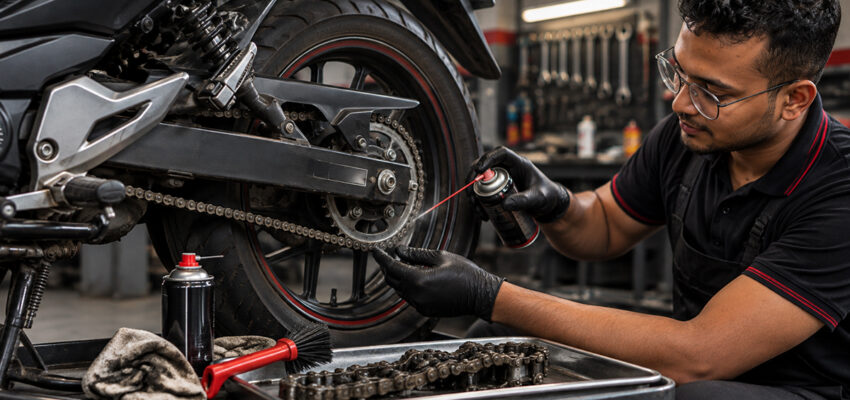
First, put the bike on the main stand or paddock stand. Never run the engine in gear for this. Rotate the rear wheel by hand, spray a good chain cleaner or kerosene on a brush, and scrub the side plates, rollers and the inside where the chain sits on the sprocket.
Let the cleaner soak for a few minutes, then wipe everything thoroughly with a clean cloth until no more black grime comes off. Avoid high-pressure water directly on the chain seals. That’s a common mistake that forces out grease from inside the links.
Once you’re done, give it a few minutes to dry completely before you think about bike chain lubrication. Applying lube on a wet chain just traps moisture and shortens its life.
Bike Chain Maintenance Mistakes To Avoid
Some habits do more harm than skipping cleaning for a week. Pouring old engine oil on the chain, for example, only attracts more dust and turns everything into sludge. Spraying polish or diesel on the rear wheel without covering the chain is another fast way to ruin it.
Riders sometimes over‑tighten the chain while doing quick bike maintenance at home. A chain with almost no slack stresses the gearbox output shaft and can even damage bearings on a long ride to the airport.
How To Lubricate Your Bike Chain Properly
Once the chain is clean and dry, it’s time for fresh lube. Do this outdoors if possible; the spray mist can travel further than you expect. Shake the can well, then spray on the inside of the lower chain run while rotating the wheel slowly.
The goal of bike chain lubrication is to get product between the rollers and pins, not to coat the outside till it drips. A light, even coat is more effective than drowning the chain and your rear tyre in excess oil.
Give the lube some time to set before riding off. If you spray and immediately rush out into Bengaluru traffic, most of it flings off on the first flyover and you’re back to a dry chain within a day.
How Often Do You Need To Lube?
In dry weather, after every wash and after a long highway ride is a safe thumb rule. In heavy rain, check the chain as soon as you get home; if it looks washed bare and starts to squeak, lube it again the same evening.
If your schedule is tight and you can’t keep track, a routine 2 wheeler service at home can fold chain lubrication into the rest of the work so it never gets skipped.
When Does A Bike Chain Need Replacement?
Chains rarely snap without warning, but they do speak to you for weeks before that. If you ignore those noises, you’ll suddenly need an urgent bike chain replacement instead of a simple tune-up.
Common signs are notchy movement when you pull the chain through your fingers, red rust on the side plates, and tight spots where the chain rises and falls as the wheel spins. If the sprocket teeth have become sharp and hooked instead of having a flat top, they’re gone.
You can also check for stretch. From the rear of the bike, try pulling the chain away from the rear sprocket at the back. If you can see daylight between the teeth and the chain, it’s close to the end of its life and your next bike service should include a new kit.
Why You Should Replace Sprockets With The Chain
Many riders in Bengaluru try to save money by changing just the chain and keeping the old, worn sprockets. That’s like putting a new gear on old, damaged teeth; the fresh chain wears to the old pattern very quickly.
Replacing all three parts together – front sprocket, rear sprocket and chain – keeps the drive smooth for much longer and avoids uneven wear that can cause jerks during acceleration.
How Chain Care Fits Into Regular Bike Maintenance
Chain work shouldn’t sit outside the rest of your care routine. It’s one of the simplest jobs, but it affects fuel efficiency, acceleration and even your brake feel because of how the bike responds when you roll on and off the throttle.
During any scheduled bike service checklist, technicians normally inspect the chain slack, clean and lube it, and advise you on remaining life. If nobody mentions the chain during a full service, ask directly; it’s that important.
If you’re curious about how this fits into the bigger picture of ownership, you can read the broader guide on bike service cost in Bangalore to see how chain kits and labour are usually factored in.
Can You Skip Chain Work During A General Service?
You can, but it’s not smart. Leaving an old, dry chain on a freshly serviced bike is like wearing worn‑out shoes with new insoles. The ride will never feel truly sorted, and you’ll blame the tune-up instead of the real culprit.
If your workshop is rushing, insist that they at least clean, inspect and lube the chain before handing the bike back.
Motorcycle Chain Maintenance For Different Riding Patterns
Not every rider in this city treats their bike the same way. Some commute from JP Nagar to Manyata every day. Others take weekend breakfast rides on the highway. A few only pull the bike out once or twice a week for nearby errands.
If you’re a daily commuter, your motorcycle chain maintenance routine needs to be tighter. Dust, speed breakers and rain will punish a neglected chain much faster than a weekend machine that sleeps in covered parking.
Occasional riders shouldn’t relax completely either. Chains on parked bikes develop surface rust and stiff links if left dry for months. A quick spin around the block and a fresh coat of lube every few weeks keeps things moving freely.
Conclusion
A smooth drive chain is the difference between a bike that feels new and one that feels tired, even on a short office run. With basic bike chain maintenance – regular cleaning, measured lubrication and timely replacement – you protect your sprockets, save fuel and avoid stranded moments on Bengaluru’s flyovers.
If you’d rather have a professional eye on it, the team at Bro Mechanic can fold careful chain inspection into your regular service so one small, ignored part doesn’t spoil every ride.
Frequently Asked Questions
Q1. How often should I clean my bike chain in Bengaluru traffic?
Ans: For most riders in this city, cleaning the chain every few weeks is a good starting point, especially if you ride through dusty stretches or construction zones. If the chain looks black and sticky or you start hearing more noise from the rear, it’s time for fresh cleaning even if the distance is low.
Q2. What is the best way to lubricate a motorcycle chain at home?
Ans: Clean and dry the chain first, then apply a suitable spray on the inside of the lower run while rotating the wheel by hand. Aim the nozzle at the rollers so the lube reaches between the pins, and avoid spraying so much that it drips on the tyre or wheel.
Q3. How do I know when my chain and sprockets need replacement?
Ans: Look for hooked sprocket teeth, tight spots, rust and a chain that lifts away from the rear sprocket when you pull it back. If these signs appear together or the bike feels jerky while accelerating, it’s usually time for bike chain replacement as part of a planned service.
Q4. Can I rely only on regular bike service to take care of my chain?
Ans: Regular bike service covers inspection, adjustment and basic cleaning, which helps a lot, but city dust and rain can dirty the chain again within days. A simple home routine for wiping and checking slack between workshops keeps the drive smoother and extends chain life.
Q5. Is it safe to ride long distance with a noisy chain?
Ans: A bit of light noise right after washing can be normal, but a consistent rattle, grinding sound or visible rust suggests the chain isn’t happy. Riding long distance in that condition increases wear and the risk of sudden failure, so it’s better to service it first.
Q6. How does chain care affect the overall cost of bike maintenance in Bengaluru?
Ans: Keeping the chain clean and lubricated delays the need for a full kit change and protects related parts, which keeps your overall bike maintenance bills lower. Ignoring chain care means more frequent replacements and can push up the cost of future services.
