

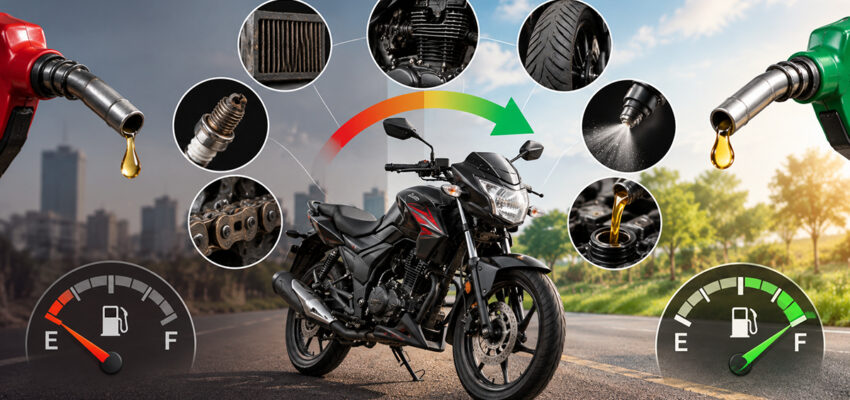
Bike Mileage Dropping? 10 Common Reasons and How to Improve Fuel Efficiency
You start Googling how to improve bike mileage when your usual office run suddenly needs an extra fuel stop and your monthly petrol budget quietly creeps up. If you ride daily in Bengaluru traffic, even a small drop in mileage hurts because most of your riding is stop‑go, low gear and loaded.
The good news: motorcycle mileage doesn’t fall overnight for no reason. There are only so many culprits, and once you know where to look, you can fix most of them with better habits and timely bike service rather than expensive parts.
Why Your Bike Mileage Suddenly Drops
If your mileage has dropped by a few kmpl over a couple of months, that’s usually a slow build-up of small issues: slightly low tyre pressure, chain gone dry, overdue oil, relaxed riding habits turning into lazy ones. A sharp drop in one or two rides points to a specific fault that needs attention.
Before blaming the fuel pump near your home or office, think back over the last 3–4 weeks. New route in peak Outer Ring Road traffic? Extra pillion most days? More short trips around your area in Bengaluru instead of one long commute? All of this quietly eats into bike fuel efficiency.
Start with the simple checks you can do at home and only then move to workshop-level diagnosis. That way you don’t spend on parts you don’t need.
Reason 1: Incorrect Tyre Pressure And Rolling Resistance
Soft tyres make the engine work harder just to keep the bike moving. If your rear tyre is even a few psi below the recommended level, you can feel the drag in slow traffic and see it on your fuel receipts within a week.
Check your owner’s manual or the sticker on the swingarm, then check pressures when the tyres are cold, not right after a long ride. In city use, especially with mixed loads, it pays to check once a week, not once a month. If you’ve recently changed tyres or done a doorstep tyre change, re-confirm that the new tyre size matches the stock recommendation, because oversized tyres also cut mileage.
Reason 2: Overdue Engine Oil And Poor Lubrication
Old, dirty oil increases internal friction, so the engine needs more fuel to produce the same power. You might notice the bike running a bit rougher, sounding louder and feeling hotter on slow stretches before you see a clear mileage drop.
If you can’t remember the last time you changed oil, that’s already a sign. City riders in Bengaluru who are stuck in slow traffic most days often need more frequent changes than the odometer alone suggests. A properly timed bike engine oil change is one of the quickest ways to recover lost kmpl.
Reason 3: Dirty Air Filter And Restricted Breathing
Your engine needs a correct mix of air and fuel. A clogged air filter starves the engine of air, so the mixture becomes richer and burns more fuel than necessary. This is a common bike mileage problem for riders who commute on dusty stretches or bad roads.
Signs include sluggish response when you open the throttle and darker exhaust smoke on hard acceleration. Most filters are simple to inspect; clean or replace them as per the service schedule. If you ride through ongoing Metro work zones daily, ask your mechanic if a more frequent air filter cleaning cycle makes sense for you.
Reason 4: Chain, Brakes And Hidden Mechanical Drag
A dry, rusty or overtight chain wastes power, and that loss shows up as poor motorcycle mileage. The bike feels heavy even in lower gears, and you might hear whining or clunking sounds from the rear.
On the other side, dragging brakes do the same thing. After a short ride, touch the brake discs or drums carefully; if they’re hotter than expected without much braking, something may be binding. For a full check of chain tension, lubrication and brake health, it’s smart to follow a structured bike service checklist at least once every few months.
How A Clean Drivetrain Helps Improve Bike Mileage
A well-lubricated chain with the right slack reduces resistance and keeps power delivery smooth. That lets you ride at lower rpm in each gear without the bike feeling strained.
Keep a simple routine: clean the chain every few weeks or after riding in rain, then lubricate it and check slack. If you want a deeper guide, refer to a detailed bike chain maintenance article and follow its intervals.
Reason 5: Aggressive Riding And Wrong Gear Usage
Hard acceleration between signals, late braking and holding on to lower gears longer than needed are fast ways to waste fuel. Many riders in Bengaluru roads do this without realising, just trying to “beat” the next junction or squeeze through gaps.
Fuel-efficient riding is calmer but not slower. Shift up early, avoid revving near the redline in city traffic, and look ahead so you can roll off the throttle and use engine braking instead of last‑second hard stops. These habits alone can improve bike mileage without touching the bike mechanically.
How To Improve Bike Mileage With Daily Riding Habits
Think of your right wrist as the biggest tuning tool you have. Smooth, progressive throttle openings, avoiding unnecessary revving at standstill and not launching hard when the signal turns green all cut fuel use.
Plan your route to avoid the worst junctions and flyovers during peak hours if possible. One slightly longer but smoother stretch can still give better bike fuel efficiency than a shorter route with constant start‑stop crawling.
Reason 6: Poor Or Irregular Bike Service
Skipping scheduled maintenance slowly turns a healthy bike into a thirsty one. Small issues stack up: plug gap out of spec, valves slightly off, throttle body dirty, idle rpm misadjusted. None of them alone kills mileage, but together they do.
If you struggle to find time to visit a workshop, consider a trusted 2 wheeler service at home so your bike still gets proper attention without losing a workday. Regular, thoughtful bike service keeps the engine in tune and stops minor problems from becoming expensive repairs.
How A Professional Mechanic Diagnoses Mileage Drop
A good mechanic won’t just swap parts. They’ll ask when the problem started, check for fuel leaks, inspect spark plug colour, test compression if needed and scan for error codes on fuel-injected bikes.
They’ll also look at service history, typical usage and routes. That’s why sharing your riding pattern honestly helps them spot root causes instead of just clearing symptoms.
Reason 7: Electrical Issues And Weak Spark
A weak battery or failing ignition components can cause incomplete combustion, which wastes fuel and sometimes leads to starting trouble. Riders often first notice slow cranking or flickering lights, then a drop in mileage later.
If your bike has had electrical complaints recently, don’t ignore them. A proper diagnosis, including checks covered under bike battery problems, can restore clean combustion and stabilise mileage again.
Reason 8: Wrong Fuel, Idling Habits And Extra Weight
Using higher-octane fuel on a bike that doesn’t need it doesn’t improve performance or mileage. More harmful is regularly filling from unreliable-looking pumps where quantity and quality may both be suspect.
Idling for long periods with the engine running at office gates, apartment security checks or during long phone calls is another silent fuel drain. So is carrying unnecessary weight in saddlebags or top boxes every single day. Travel light unless you truly need the luggage.
Reason 9: Carburettor Or Fuel Injection Problems
On carb bikes, incorrect tuning, a misadjusted idle screw or a sticking choke can all cause a rich mixture and poor fuel economy. Fuel‑injected bikes can suffer from dirty injectors or faulty sensors that throw off fuelling.
If you notice strong fuel smell, black soot around the exhaust tip or unstable idling along with poor mileage, it’s time for proper diagnosis. Don’t keep riding in this state; you’re not just wasting petrol, you may be harming the engine and catalytic converter.
Reason 10: Riding Conditions Unique To Bengaluru
Local conditions matter more than spec sheet numbers. Frequent speed breakers, broken patches, long jams on Tech Park approaches and stop‑go traffic around major junctions all pull real‑world mileage below brochure claims.
You can’t change the city, but you can ride smarter in it. Club errands to cut short one‑kilometre runs, maintain your bike for your actual use pattern and be realistic about expected numbers. Compare your present mileage only to your own earlier figures on similar routes, not to what a friend claims on a completely different commute.
Putting It All Together: A Simple Mileage Recovery Plan
If your fuel bills feel out of control, don’t chase magic additives or gadgets. Start with basics in this order: tyre pressures, chain and brakes, air filter, engine oil, then riding style. Track mileage over two or three full tankfuls, not just one refill.
If the numbers don’t improve, book a structured bike service at home or visit a trusted workshop so they can check engine tuning, fuelling and electrical health properly.
Conclusion
Recovering lost mileage is usually about fixing a few small leaks in your riding habits and maintenance routine, not chasing a single big fault. Once you understand how to improve bike mileage in real Bengaluru conditions, you can keep fuel costs predictable and your bike running smoother for longer.
If you’d rather have a pro handle the diagnosis while you get on with your day, book a visit from Bro Mechanic and let an experienced technician go through your bike end to end.
Frequently Asked Questions
Q1. How can I quickly check if my bike mileage has really dropped?
Ans: Use the tank-full to tank-full method. Fill your tank, reset the trip meter, ride as usual until the next refill, then divide kilometres ridden by litres filled. Do this two or three times. If the number is consistently lower than before, you have a genuine bike mileage problem.
Q2. How often should I service my bike to keep mileage good in Bengaluru?
Ans: Follow the service intervals in your owner’s manual, but understand that heavy city traffic, short trips and frequent stop‑go riding justify more frequent checks. Even if you haven’t hit the exact kilometres, schedule bike maintenance at least as often as the manufacturer suggests, and don’t skip oil changes or basic inspections.
Q3. Can wrong engine oil grade affect how to improve bike mileage?
Ans: Yes, using oil that’s too thick or too thin for your engine and climate can harm efficiency. Oil that’s too thick increases drag, while very thin oil might not protect well at higher temperatures. Stick closely to the recommended grade and change it on time to improve bike mileage and engine life together.
Q4. Does riding with a pillion always reduce bike fuel efficiency?
Ans: Extra weight does increase fuel use, but sensible riding can limit the impact. Accelerate smoothly, avoid sudden braking and keep tyre pressures at the recommended level for two-up riding. With good technique and proper bike fuel efficiency habits, the drop in mileage with a regular pillion can be quite small.
Q5. How much can tyre pressure affect motorcycle mileage?
Ans: Under‑inflated tyres increase rolling resistance, so the engine must burn more fuel for the same speed. Even a moderate drop in pressure across both tyres can noticeably hurt motorcycle mileage over a month of city rides. A simple weekly pressure check at a reliable air pump is an easy win.
Q6. Is a doorstep bike service enough to improve bike mileage, or do I need a full garage visit?
Ans: A good doorstep mechanic can handle routine bike service, oil and filter changes, chain adjustments and basic tuning, which already cover most mileage issues. If they find deeper problems like internal engine wear or complex electrical faults, they may recommend a workshop visit. Start with convenient doorstep care, then escalate only if the problem demands it.
