

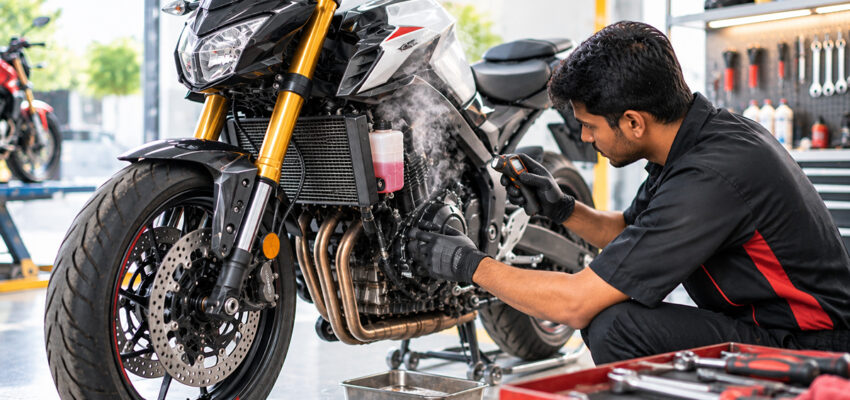
Bike Engine Overheating: Causes, Warning Signs and What to Do
Stuck in Silk Board traffic and you suddenly smell something burning from your bike? That sharp, hot smell and extra heat on your legs usually means one thing: bike engine overheating. Ignore it, and you risk a seized engine and a very expensive repair.
If you ride daily in Bengaluru heat and bumper-to-bumper traffic, your bike is under far more stress than the brochure promised. This guide walks you through real-world causes, early warning signs, what you must do on the spot, and when it’s time to call for proper engine service instead of “managing somehow”.
Main Causes Of Bike Engine Overheating
On city commutes, most riders blame the weather, but the usual bike overheating causes are mechanical or maintenance related. Bengaluru traffic just exposes them faster.
The most common issue is low or poor-quality engine oil. Old oil loses viscosity, doesn’t lubricate properly and stops carrying heat away from the moving parts. That’s why skipping or stretching your oil changes is one of the fastest paths to a hot running motor.
For bikes with liquid cooling, low coolant, air bubbles in the system, or a faulty radiator fan can trigger motorcycle overheating even on a short office run. For air-cooled engines, blocked cooling fins covered in mud, dust or old chain lube trap heat and stop air from doing its job.
Other culprits include a tight or dragging brake, wrong grade engine oil, clogged air filter, and idling for long spells with the clutch half engaged. All of these make the engine work harder than it should.
Warning Signs Your Bike Is Overheating
A smart rider doesn’t wait until the engine stalls. If you catch the early signs, you can prevent a major bike engine problem before it becomes permanent damage.
Start with the heat you feel. More warmth is normal in slow traffic, but if the heat on your thighs or calves suddenly spikes compared to your usual ride, pay attention. Many modern bikes will switch on the radiator fan more frequently or louder than you’re used to when they’re running hot.
Watch the instrument cluster. If your bike has a temperature gauge or warning light, take it seriously. A flickering or solid red temperature light means you need to pull over safely. Ignoring it just to “clear this one junction” is how engines get scored cylinders.
Other clues are a burning smell, pinging or knocking sound from the engine, loss of power and hard gear shifts. If you notice two or more of these together, treat it as an urgent cooling issue.
Immediate Steps To Take When Your Engine Overheats
If you suspect bike engine overheating in the middle of a ride, don’t panic, but don’t push your luck either. Your goal is to reduce load on the engine as quickly and safely as possible.
First, find a safe spot to stop. Don’t just cut the engine in the middle of Outer Ring Road traffic. Pull to the side, put the bike on the main stand if you have one, and let the engine idle for a short while before switching it off. That helps the oil circulate and carry some heat out.
Don’t open the radiator cap on a hot engine. Hot coolant can burst out and cause serious burns. Let the bike cool naturally. Use the time to check for obvious issues: stuck rear brake, something jammed near the wheel, oil leaks under the engine or coolant dripping near the radiator.
If the bike refuses to start again after it cools down, don’t keep cranking. That’s when a professional 2 wheeler service at home can save you a tow and further damage.
Common Mechanical Issues Behind Overheating In Bengaluru
City riders often blame “company problem”, but repeated overheating usually means something in your regular bike maintenance routine is being skipped or done wrong.
A badly adjusted or worn-out clutch can make the engine slip under load, especially when you’re feathering it in slow-moving traffic near IT parks. The engine revs, but the power doesn’t reach the wheel efficiently, so the motor runs hotter than it should.
Similarly, a dragging brake — often from misaligned pads or a jammed caliper — forces the engine to work against constant resistance. You may not notice it except for slightly lower mileage and more heat, but over a commuting week it adds up.
If your cooling system isn’t in good shape, heat builds quickly. Low coolant level, an old coolant mix, or a non-working fan switch can all make city riding punishing for the engine. For air-cooled bikes, caked mud from monsoon rides around Bengaluru suburbs often blocks cooling fins, silently making things worse.
Maintenance Habits That Prevent Overheating
Most riders don’t need major modifications; they need a disciplined engine service schedule and a few simple habits. Start with engine oil. Change it on time, and use the grade recommended in your owner’s manual. Short city runs and stop-go traffic justify sticking closer to the lower end of the recommended interval.
Clean cooling fins and check the radiator area regularly. During monsoon, wash off slush and grime build-up that insulates the engine. If your bike has a radiator, ask your mechanic to inspect the fan, coolant level and any signs of leakage during your routine doorstep bike service in Bangalore.
Keep an eye on the brake feel. Spongy or unusually stiff levers, or a brake that doesn’t fully release, needs attention. Catching these early not only keeps you safe but also prevents a hidden load that leads to motorcycle overheating over time.
Finally, ride technique matters. Avoid holding the clutch halfway for long stretches in crawl traffic. Shift to neutral at long signals, and give the bike small coasting breaks where traffic allows instead of constantly slipping the clutch.
When To Visit A Mechanic For Overheating Issues
You can handle basic checks yourself, but repeat bike overheating causes should never be ignored. If your bike heats up faster than it used to, or the fan runs almost all the time, it’s time for a proper inspection.
Look out for oil turning very dark or smelling burnt soon after a change. That suggests excessive internal heat. Unusual engine noise, frequent stalling in traffic, or coolant level dropping without visible leaks are other red flags that call for professional bike repair.
In Bengaluru, many riders delay workshops because they can’t spare half a day. That’s where a reliable bike service at home session helps. A good technician can check oil condition, cooling system performance, brakes, clutch and air filter without you standing in a queue.
If you’ve already experienced one severe overheat episode — warning light on, engine cutting out, strong burning smell — get the engine inspected even if it feels “normal” later. Internal damage doesn’t always show up immediately.
How Overheating Affects Other Parts Of Your Bike
Consistent heat doesn’t just hurt the engine; it slowly affects other systems and can end up creating a serious bike engine problem plus extra repair costs.
High temperature breaks down engine oil faster, so your protection window shrinks. It can harden rubber seals and gaskets, leading to small oil leaks that many riders first notice as stains on the floor where they park.
Over time, overheating can warp metal components, glaze clutch plates and stress electrical parts routed near the engine. Even your fuel economy suffers, and that’s often the first thing riders in Bengaluru complain about before they link it back to cooling issues.
Fixing the root cause early through consistent bike maintenance is always cheaper than waiting until you need major internal work.
Conclusion
Riding in Bengaluru traffic will always be hard on your machine, but bike engine overheating doesn’t have to be part of the daily routine. Watch for early warning signs, keep up with timely oil changes and cooling checks, and treat any serious heat episode as a reason to get the engine looked at properly.
When you need help beyond basic checks, a trusted local service like Bro Mechanic can inspect, service and repair your bike before small temperature issues turn into permanent damage and long workshop visits. Take overheating seriously, and your engine will return the favour with smoother, longer service life.
Frequently Asked Questions
Q1. Why does my bike overheat so quickly in Bengaluru traffic?
Ans: Heavy stop-go traffic, long idling at signals and hot ambient temperatures make engines work harder with less airflow. If your cooling system, oil, or brakes aren’t in good shape, this load shows up as bike engine overheating. A mechanic can check oil grade, coolant, fins and brake drag to pinpoint the cause.
Q2. What are the most common bike overheating causes during summer?
Ans: In hotter months, low or old engine oil, blocked cooling fins and weak radiator fans are frequent bike overheating causes. A clogged air filter or riding long distances with a slipping clutch also adds heat. Regular servicing before peak summer helps you catch these problems early.
Q3. Can overheating damage my bike engine permanently?
Ans: Yes, severe overheating can score cylinder walls, damage piston rings and warp engine components. That turns a simple bike engine problem into an expensive rebuild. If the temperature light comes on, or the engine cuts out from heat, stop riding and get it inspected before using the bike again.
Q4. How often should I do engine service to avoid overheating?
Ans: Follow the interval in your owner’s manual, but riders who face daily congestion often benefit from slightly earlier engine service. Timely oil changes, coolant checks and air filter cleaning keep heat under control. Talk to your mechanic about a schedule that fits your real riding pattern, not just the ideal brochure conditions.
Q5. Is there a quick way to cool a motorcycle overheating on the road?
Ans: Safely pull over, let the bike idle briefly, then switch it off and allow it to cool fully. Don’t pour water on the engine or open the radiator cap of a motorcycle overheating, as that can cause injury or cracks from sudden temperature change. Once cooled, check for visible leaks or stuck brakes before riding again.
Q6. How do I know if I need professional bike repair for overheating issues?
Ans: If your bike overheats more than once, loses power, shows a warning light, or keeps consuming oil or coolant, you need proper bike repair rather than just topping up fluids. Riders in Bengaluru who rely on their bike daily should treat repeated heat issues as urgent rather than waiting for a full breakdown.
